
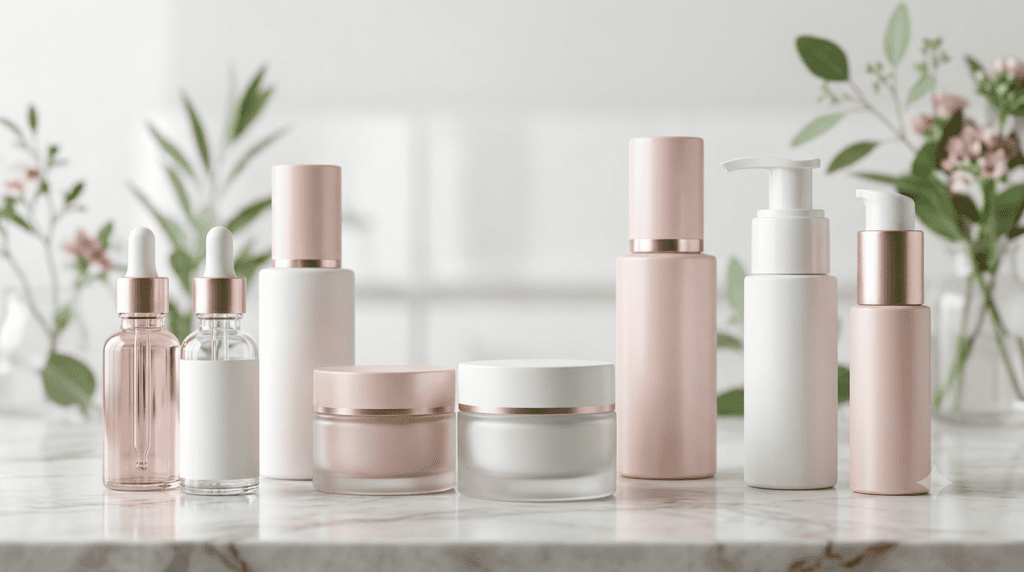
India’s beauty and personal care industry is one of the fastest-growing consumer categories in the country, driven by rising disposable incomes, social-media-led beauty discovery, and a booming D2C ecosystem. If you’re wondering how to start a cosmetics brand in India, the good news is that you no longer need your own factory, deep formulation expertise, or a massive budget to launch — private label and third-party manufacturing have made it possible to go from idea to shelf-ready product in months, not years.
This guide walks you through every step of launching a cosmetics brand in India, from choosing your niche to finding the right manufacturing partner.
1. Choose Your Niche and Product Category
Before anything else, decide who you’re selling to and what problem your products solve. The Indian beauty market is broad, so specificity helps a new brand stand out.
Popular categories for new cosmetics brands include:
- Skincare — serums, moisturizers, cleansers, face masks
- Color cosmetics — lipsticks, foundations, eyeshadows, blushes, nail colors
- Haircare — oils, serums, anti-hairfall ranges
- Anti-ageing — peptide and antioxidant-based formulations
- Baby care — gentle, dermatologically safe formulations
- Hybrid beauty — makeup with added skincare benefits
2. Decide Your Business Model: Private Label vs. Custom Formulation
You don’t need to build a manufacturing facility to launch a cosmetics brand. Most founders choose one of these routes:
Model | Description | Best For |
Private Label | Ready-formulated products packaged and branded as your own | Fastest, lowest-cost launch |
Third-Party / Contract Manufacturing | A manufacturer produces your products at scale under your specifications | Growing brands needing flexible batch sizes |
Custom Formulation | A dedicated R&D team develops a unique formula from scratch for your brand | Brands wanting strong differentiation |
A trusted private label and third-party cosmetics manufacturer can support you at any of these stages — starting with ready-to-sell private label products and graduating to fully custom formulations as your brand scales.
3. Register Your Business
Set up a formal legal entity before you start selling. Most cosmetics founders in India choose:
- Private Limited Company — ideal if you plan to raise funding
- LLP — a good middle ground for liability protection
- Sole Proprietorship — simplest option for small, bootstrapped brands
You’ll also need:
- GST registration — required by most manufacturers and marketplaces
- Trademark registration — protect your brand name and logo early
- MSME/Udyam registration — optional, but unlocks government schemes and easier vendor terms
4. Get the Right Cosmetics Licenses
This is the step most first-time founders underestimate. In India, cosmetics are regulated under the Drugs and Cosmetics Act, 1940 and the Cosmetics Rules, 2020, overseen by the Central Drugs Standard Control Organisation (CDSCO) and State Licensing Authorities.
- Manufacturing in India: requires a manufacturing license from the State Licensing Authority — or, if you go the private label/contract manufacturing route, your manufacturing partner must already hold this license, with the arrangement reflecting your brand as the marketer.
- Importing cosmetics: requires an import registration certificate from CDSCO, filed via the SUGAM Portal (Form COS-1), along with formulation details, safety/test reports, and labelling documentation.
- Other checks: BIS certification (for specific product categories), Legal Metrology registration for pre-packaged goods, and FSSAI only where a product blurs into an ingestible category.
Working with an already GMP-compliant, ISO and FDA-certified manufacturer removes much of this regulatory burden, since compliance is built into their production process from day one.
5. Choose the Right Manufacturing Partner
Your manufacturing partner shapes your product quality, cost, and speed to market. When evaluating one, check for:
- A valid manufacturing license under the Cosmetics Rules, 2020
- GMP, ISO, and FDA compliance, and ideally Vegan, Halal, or Sedex certification if you’re targeting clean-beauty or export markets
- In-house R&D and cosmetic chemists for custom formulation support
- Flexible MOQs — from small boutique batches to large-scale production
- End-to-end support: formulation, sampling, packaging sourcing, and final production under one roof
Fablay Cosmetics Formulation, a third-party and private label cosmetics manufacturer in India from the Rythmx Group, offers exactly this — GMP-compliant, ISO and FDA-certified manufacturing across skincare, color cosmetics, haircare, anti-ageing, and baby care, with flexible MOQs and in-house R&D support to take a brand from concept to finished product.
6. Develop Branding and Packaging
Cosmetics is a highly visual category — packaging often influences the first purchase decision as much as the formula. Focus on:
- A brand name and logo that reflect your niche and audience
- Packaging that’s Instagram-friendly and functional (airless pumps, tamper-evident seals, sustainable materials for eco-conscious buyers)
- Mandatory label information: manufacturer/marketer name and address, net quantity, batch number, manufacturing/expiry date, ingredient list, and usage directions as required under the Cosmetics Rules, 2020
- A consistent visual identity across packaging, website, and social media
A manufacturer offering curated packaging vendor options — sustainable, luxury, or practical — can save significant time versus sourcing packaging independently.
7. Set Up Your Sales Channels
Most new Indian cosmetics brands use a hybrid, multi-channel approach:
- Your own D2C website — full margin control and customer data
- Marketplaces — Nykaa, Amazon, Flipkart, Myntra for visibility and trust
- Quick commerce — Blinkit, Zepto, Instamart for impulse beauty purchases
- Social commerce — Instagram and WhatsApp catalogues
- Offline retail — salons, pharmacies, and multi-brand beauty stores once you have traction
Start with one or two channels, validate demand, then expand.
8. Plan Your Marketing Strategy
Beauty is a discovery-driven category. Combine:
- Influencer marketing — micro and nano influencers often outperform big names for new brands
- Content marketing and SEO — blogs, tutorials, and how-to guides for long-term organic traffic
- Paid social ads — for retargeting and cold-audience testing
- Email/WhatsApp marketing — for repeat purchases and loyalty
- Sampling and bundles — helpful when customers are hesitant to try an unfamiliar brand
9. Price and Position Your Products
Account for manufacturing cost per unit, packaging, platform commissions, shipping/returns, and marketing spend as a percentage of revenue when setting prices. Avoid under-pricing early just to gain traction — build pricing around sustainable unit economics from the start
10. Launch, Sample, and Scale
Once your formulation and packaging are finalized:
- Approve a pre-production sample covering both formulation and packaging before mass production
- Run a soft launch to gather early feedback and reviews
- Track repeat purchase rate and customer acquisition cost
- Scale your MOQ with your manufacturer as demand grows, moving from boutique batches to larger production runs
FAQ
Is a license required to sell cosmetics in India?
Yes. Cosmetics manufactured in India require a manufacturing license from the State Licensing Authority, while imported cosmetics require CDSCO registration under the Cosmetics Rules, 2020. Working with an already-licensed private label manufacturer covers this requirement on the manufacturing side.
Can I start a cosmetics brand without owning a factory?
Yes. Most new founders use private label or third-party contract manufacturing, where an already-certified manufacturer produces the product under your brand name and packaging, so you don’t need your own facility to launch.
What is the minimum order quantity (MOQ) for a private label cosmetics brand?
MOQs vary by manufacturer and product type, ranging from small boutique batches to large-scale orders, so it’s worth choosing a partner that offers flexible MOQ options as your brand grows.
Do I need FSSAI registration for cosmetics?
Generally no — cosmetics fall under the Cosmetics Rules, 2020 and CDSCO, not FSSAI, which applies mainly to ingestible products.
How long does it take to launch a cosmetics brand in India?
Depending on formulation, sampling, licensing, and packaging lead times, most founders take a few months from initial planning to first sale when working with an established private label manufacturer.
Conclusion
Starting a cosmetics brand in India is more achievable today than ever, thanks to accessible private label and contract manufacturing, D2C platforms, and social-media-driven discovery. The brands that succeed treat compliance and manufacturing quality as seriously as branding and marketing. Nail your niche, choose a certified manufacturing partner, and build a multi-channel go-to-market plan — and you’ll be well positioned to launch and scale sustainably.